One-Stop OEM Metal Parts Manufacturing From Prototype to Mass Production
Author:Xinxing Time:2026-08-07 08:10:48 Click:152
Bringing a metal product from concept to volume production involves numerous steps: design validation, material sourcing, prototyping, tooling, manufacturing, finishing, and assembly. When each of these steps involves a different vendor, the complexity of managing the supply chain multiplies. This is where a one-stop OEM metal parts manufacturer adds significant value. By consolidating multiple capabilities under one roof, these facilities streamline the development process, reduce lead times, and eliminate the communication gaps that often cause costly errors.
The Advantages of Integrated Manufacturing
Working with a single metal parts supplier for the entire production lifecycle offers tangible benefits. Design feedback comes from the team that will actually build the tooling and produce the parts, making manufacturability suggestions more actionable. Material procurement leverages the supplier's buying power across multiple projects, often resulting in better pricing than a buyer could secure independently. Prototyping and production use consistent processes, so there are no surprises when scaling from pilot runs to full production. Quality responsibility is clearly defined, eliminating disputes between different vendors about who caused a defect. Lead times shrink because parts move between production steps internally rather than being shipped to external processors. These efficiencies translate directly into lower total cost and faster time to market.
Stamping Capabilities for Volume Production
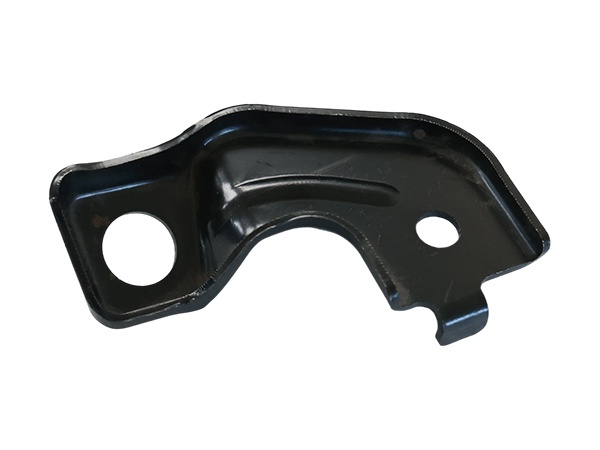
For high-volume metal components, stamping is the most cost-effective manufacturing method. A comprehensive manufacturer should offer stamping presses across a range of tonnages, from small precision presses for delicate electronic components to large-capacity presses for structural parts. Progressive die stamping is ideal for parts requiring multiple operations, producing finished components at rates of hundreds of parts per minute. Transfer stamping handles larger or more complex parts that need to move between separate die stations. Deep drawing capabilities allow the production of seamless enclosures and housings. Stamping tooling represents a significant upfront investment, but the per-part cost at volume is the lowest of any metal forming process. An experienced manufacturer helps buyers determine the volume thresholds at which stamping makes economic sense.
Sheet Metal Fabrication for Flexible Production
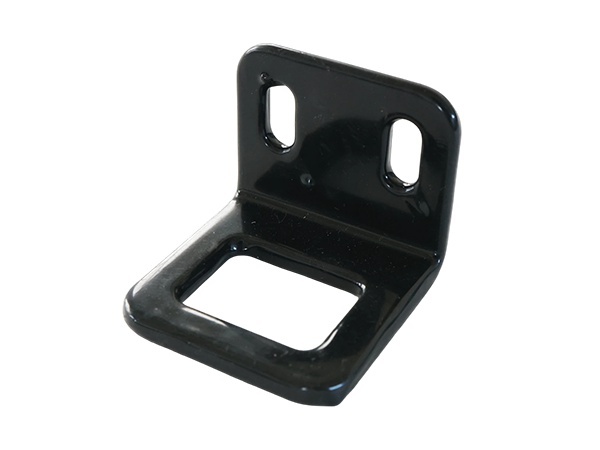
Sheet metal fabrication fills the gap between prototyping and high-volume stamping. For mid-volume production or parts with frequent design changes, laser cutting and CNC press braking offer exceptional flexibility without the tooling investment required for stamping. Modern fabrication shops can produce parts directly from CAD files with minimal setup time. A versatile supplier integrates fabrication with welding, assembly, and finishing to deliver complete assemblies rather than individual components. Fabrication is particularly well suited for enclosures, cabinets, frames, and structural components where dimensional accuracy and appearance are important. Combining stamping and fabrication capabilities in one facility allows the manufacturer to recommend the optimal process for each part rather than being limited to a single technology.
CNC Machining for Precision Components
When parts require tight tolerances, complex geometries, or features that cannot be formed, CNC machining provides the necessary precision. Turning operations produce cylindrical components such as shafts, bushings, and fittings. Milling operations create flat surfaces, slots, pockets, and contoured profiles. Multi-axis machining centers can produce complex parts in a single setup, reducing handling and improving accuracy. Swiss-type machining excels at small, intricate parts for medical and electronic applications. A one-stop supplier with CNC machining capabilities can handle the precision components that complement stamped and fabricated parts, delivering complete assemblies ready for final use. This integration is especially valuable for products that combine precision machined features with formed sheet metal structures.
Value-Added Services
Beyond primary manufacturing, a full-service metal parts supplier offers a range of value-added services that simplify the customer's supply chain. In-house tool design and fabrication ensures that dies and fixtures are built with production requirements fully understood. Welding and assembly services transform individual components into completed products. Surface finishing, including plating, powder coating, and anodizing, is applied in controlled conditions. Hardware installation adds threaded inserts, studs, and fasteners. Packaging and kitting prepare parts for direct delivery to the customer's production line. Quality documentation including material certifications, dimensional reports, and inspection records accompanies each shipment. Each service that is integrated into the supplier's facility represents one less vendor the customer needs to qualify, contract, and manage.
Managing the Transition from Prototype to Production
One of the most critical phases of a product development project is the transition from prototype to volume production. Prototypes prove the design concept but are often produced using different processes or simpler tooling than production parts. A one-stop manufacturer manages this transition seamlessly, applying lessons learned during prototyping to optimize the production tooling and process. Pilot production runs validate that the production process delivers consistent quality before full-scale production begins. Continual improvement efforts during production identify opportunities for cycle time reduction, material savings, or quality enhancement. This systematic approach to scaling production minimizes the risks that often plague new product launches.
Conclusion
One-stop OEM metal parts manufacturing offers a compelling value proposition for companies bringing metal products to market. The integration of stamping, sheet metal fabrication, and CNC machining capabilities under a single supplier reduces complexity, shortens timelines, and improves quality outcomes. When evaluating potential manufacturing partners, look for facilities with diverse equipment, experienced engineering teams, and a track record of successful projects across the full production lifecycle. The right partner becomes an extension of your own team, contributing technical expertise and operational discipline to every project. The trend toward supplier consolidation continues to gain momentum as companies recognize the strategic advantages of working with fewer, more capable manufacturing partners who can deliver complete solutions rather than individual components.
References
National Association of Manufacturers. "OEM Supplier Integration: Best Practices for Metal Component Sourcing." Washington, D.C., 2022.
Manufacturing Engineering Magazine. "One-Stop Manufacturing: Streamlining the Metal Parts Supply Chain." Dearborn, Michigan, 2023.
Journal of Supply Chain Management. "Vertical Integration in Metal Fabrication: Benefits and Implementation." Wiley, Hoboken, New Jersey, 2022.
American Society of Mechanical Engineers. "Guide to Prototype-to-Production Transition for Metal Components." New York, 2021.
Society of Manufacturing Engineers. "Integrated Manufacturing Processes for Metal Parts Production." Dearborn, Michigan, 2022.
 Hot Products
 Contact Us
Contact:
Mobile:+86 +86 16630784777
Website:
Address: